
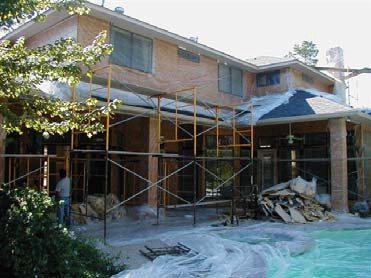
The Incompetent Builder
For more than 35 years, I have specialized in post construction repair on residential and commercial projects. Most of my work has been a direct result of poor construction practices. How many problematic construction projects and failed attempts at repairs are out there? In our experience, it’s possible to find minor to major problems on almost every home, apartment, multi-family complex, or commercial project. Often times I get involved after the 2nd, 3rd of 4th attempt at a fix. I have seen a lot of defect in my more than 40 years of being in this business. A minor portion of it has been directly connected to individual mal intent, while the majority of post construction problems are associated with, industry wide, flawed, yet “accepted” practices.
Most post-construction problems are associated with leaking windows, leaking “waterproof” exterior decks, roof leaks, or concrete and foundation settlement.
In this blog I will share some of my experiences and invite you to share your story with us. If you have a problem with your home, your business, or if you manage properties, let us help you make the right decisions so that you fix it right the first time.
If you just purchased a new boat and after taking it out on its maiden voyage it began to leak and fill up with water, would you reach for a box of Band-Aids to stop the leaking? Or would you investigate to understand what might be causing the problem? When a home or structure leaks, the quickest, cheapest, easiest fix is often where repair efforts begin. If a “professional that you have reached out to presents the confident claim that they can fix your problem for $500, then why spend $5,000? We all tend to be optimists, and furthermore, no one wants to believe that it could be something major. We do not put a high value on our home when it comes to repairs that won’t instantly add value to the property. We most certainly will put off repairs that we aren’t sure will lead to more extensive mandatory repairs. After all, who wants to dump a ton of money into a project that is not going to add to the square footage of a building or will increase the value of a property? In this report, I will show you how a simple leaking window or exterior deck, or a failed roof that is letting water into the walls, can be a much bigger problem than you think.
COMMON EXAMPLES OF CONSTRUCTION DEFECT
Failed Window Installations
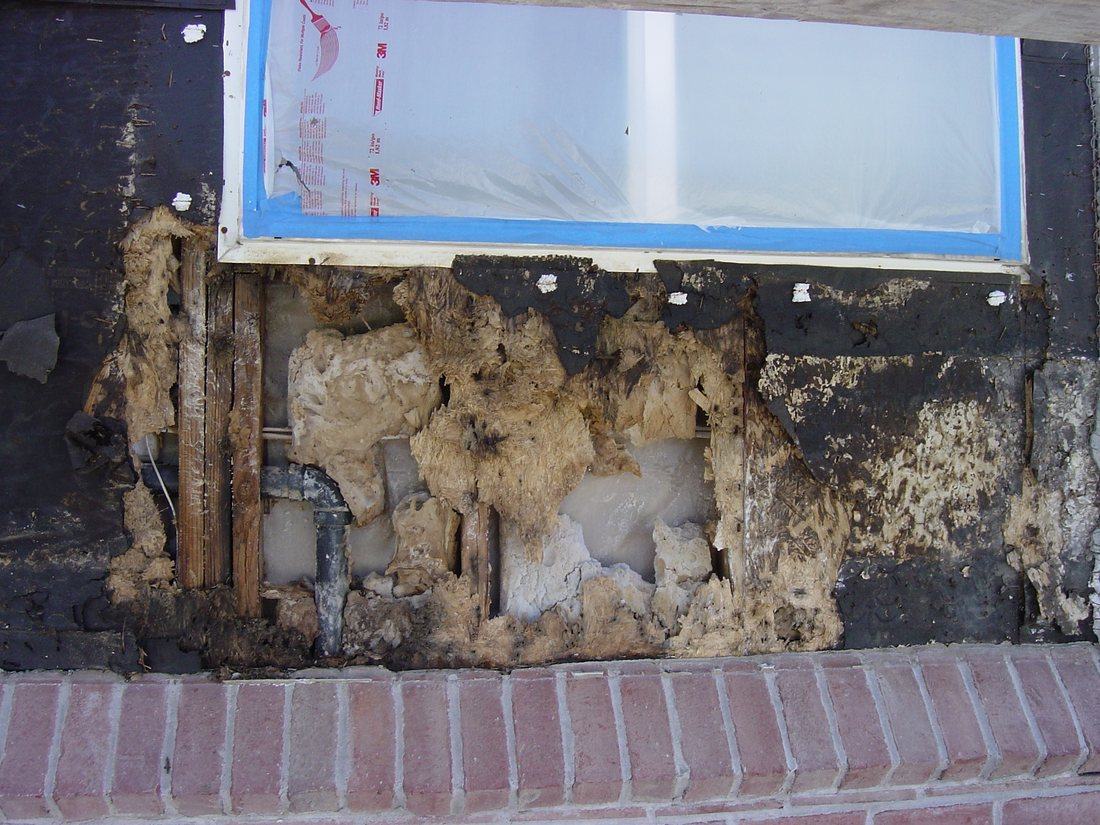
The process of flashing and water proofing a window opening is a very simple process, its really just common sense. Yet we get calls on a daily basis from people who have a leaking window. Unfortunately, we are not always the first company to get the phone call. Window replacement companies have been ‘fixing’ window leaks for years. Cut out the old window, slam in the new and now a bead of caulk is the only defense from water intrusion.
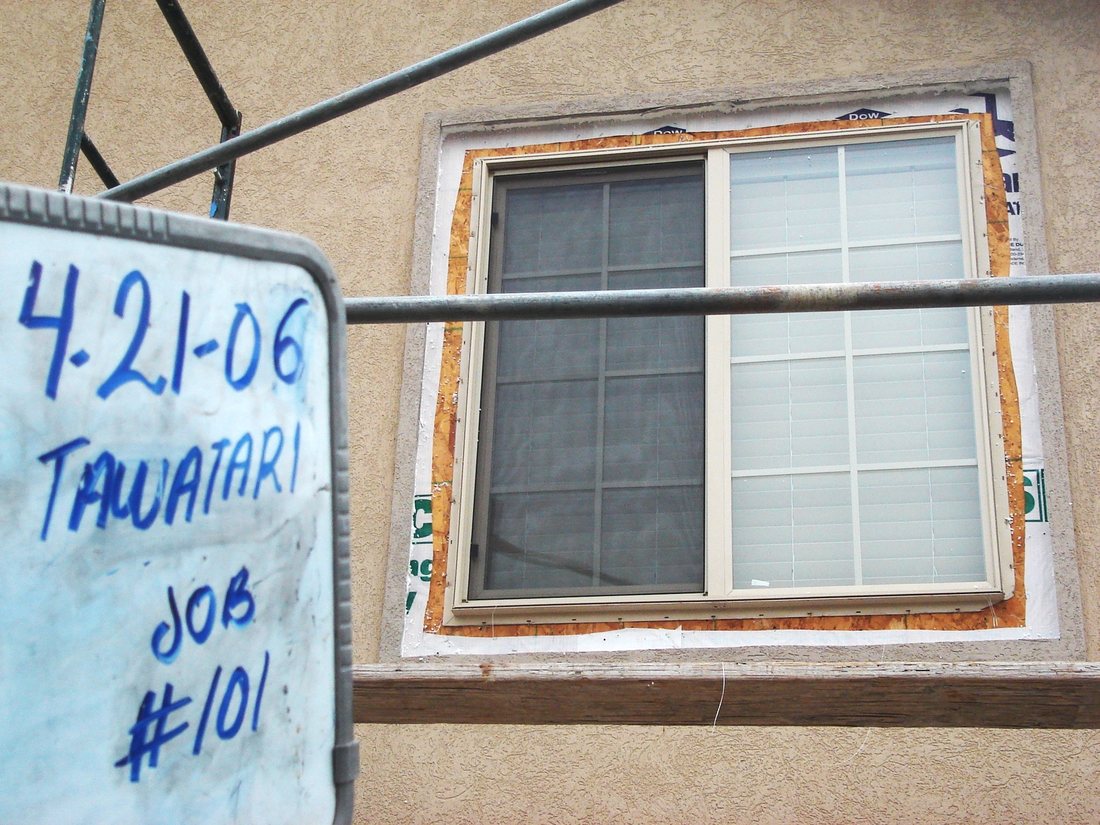
On many occasions we have been called out to look at leaking windows that were recently replaced. When we show up and see an external window fin over the exterior cladding, the answer can be hard to swallow: “Sorry mam, but the $30,000 you just spent the replace your windows was a complete waste and now you have to throw those windows away.”
How do I fix my leaking windows?
It does not matter what type of exterior cladding you have, stucco, siding, stone, brick, but if you use the cut and caulk method to replace your windows, it is not a permanent fix. Often times you will create a much more serious problem. I hear the ‘Used car sales approach’ from siding and window replacement companies on the radio all the time; “simply the Best for Less” is a commonly heard ‘jingle’ on our local talk radio station. Window replacement companies are in the business of selling you new windows, they do not make money on the labor. Many times when we arrived at a home with leaking windows, we will see caulk smeared all over the exterior of the home.
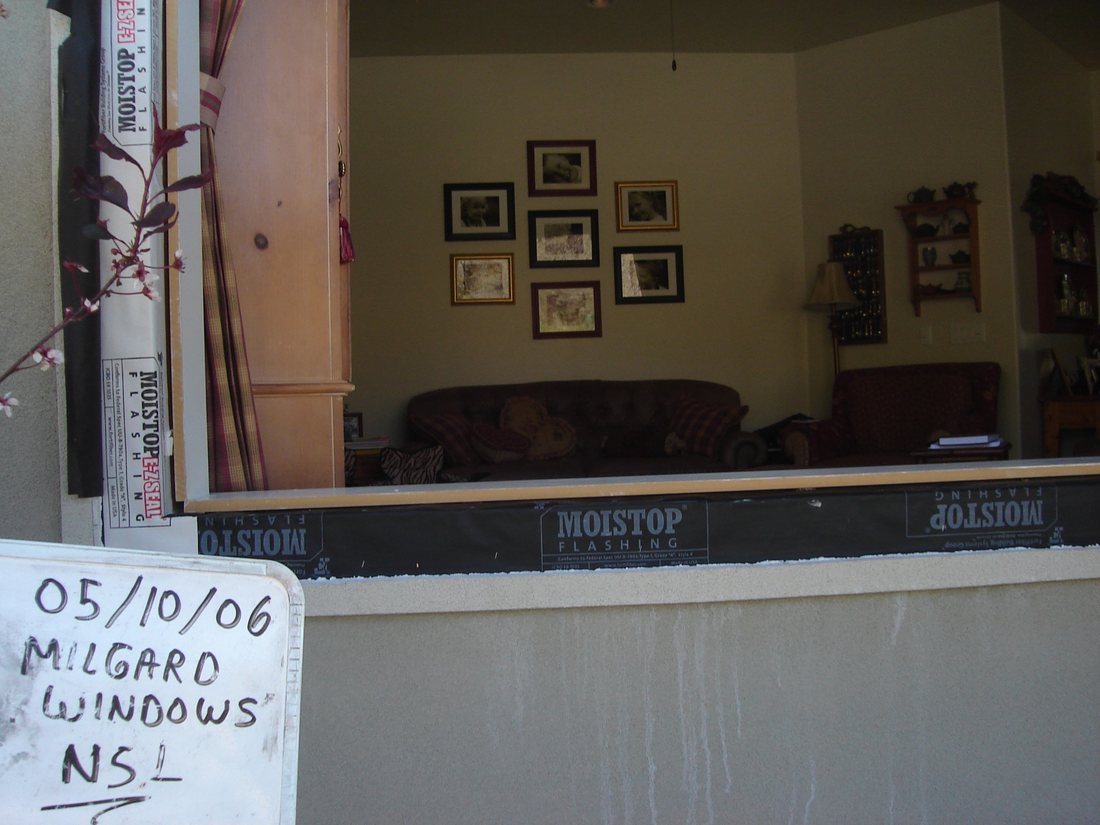
Attempts to caulk the window to the exterior cladding will not fix the problem. It is important to remember that the vapor and moisture barrier on your home is what keeps the water out. (to learn more about this, watch our video “What’s Happening behind your Stucco”, you can click here). When you cut through the barrier or existing window flashing, you will leave an avenue for moisture entry no matter how much caulk you try to pump into the gaps. The process of tying in the window frame with the moisture barrier is done using specific window flashing materials.
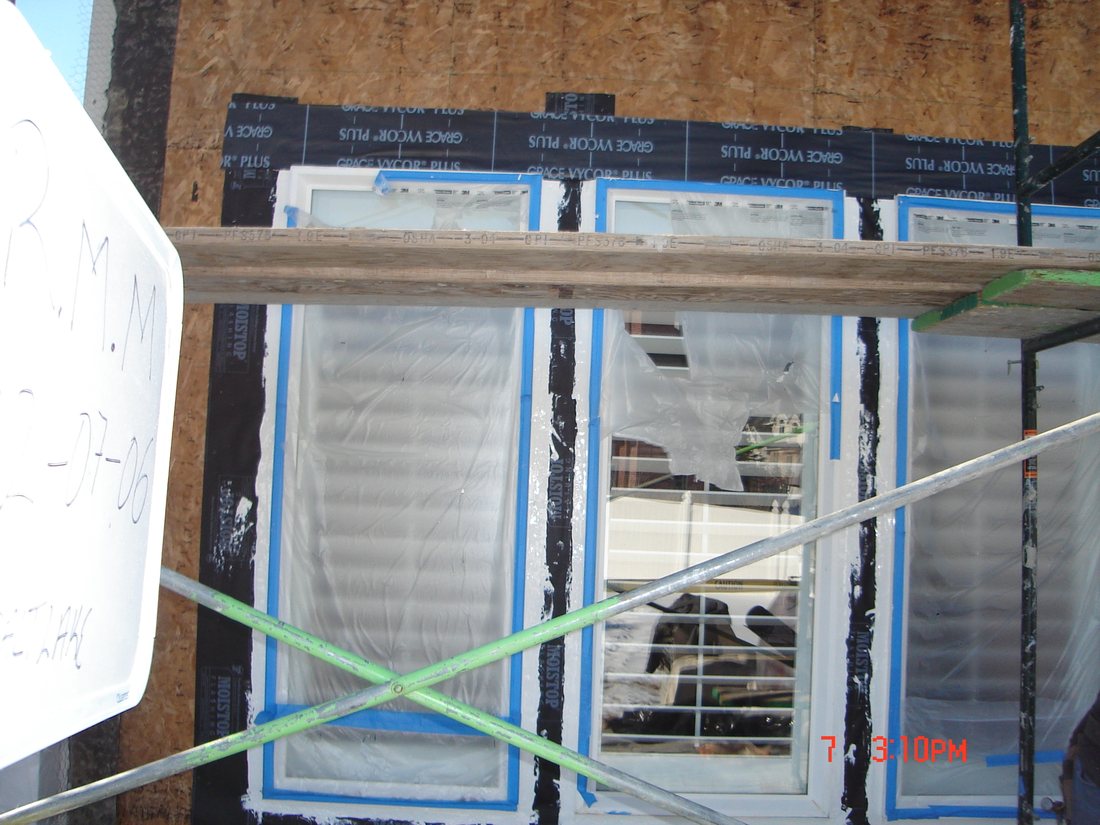
The only way to truly replace your windows, or fix a leaking window, is to tear off the exterior cladding around each window and properly integrate the moisture barrier with approved window flashing material and sealant. This process is not easy, and very costly. Window replacement companies cannot use these methods because the cost would be way too high for most homeowners. Offering the “Best for Less” should be saved for your local used car salesman’s sales pitch.